Win More Freight Tenders
With Tenderlane, freight forwarders understand tender requirements
in minutes — not days
— without reading through stacks of PDFs or manually checking 500+ lanes in Excel files.
The Problem
Your best people are stuck on data entry instead of winning bids.
Every tender lands with 10-20 documents. Payment terms. NDAs. Scope of work. Service requirements. Your team reads through each one, manually extracting what matters.
Then comes the rate card — 500+ lanes to validate. Are the port codes correct? Are the incoterms properly formatted? Is the service scope consistent? Are charges bundled correctly?
Hours of work. For a tender you might not even win.
Meanwhile, your competitors who respond faster get shortlisted first.
How Tenderlane Helps
Respond to more tenders. Free your team for strategic pricing.
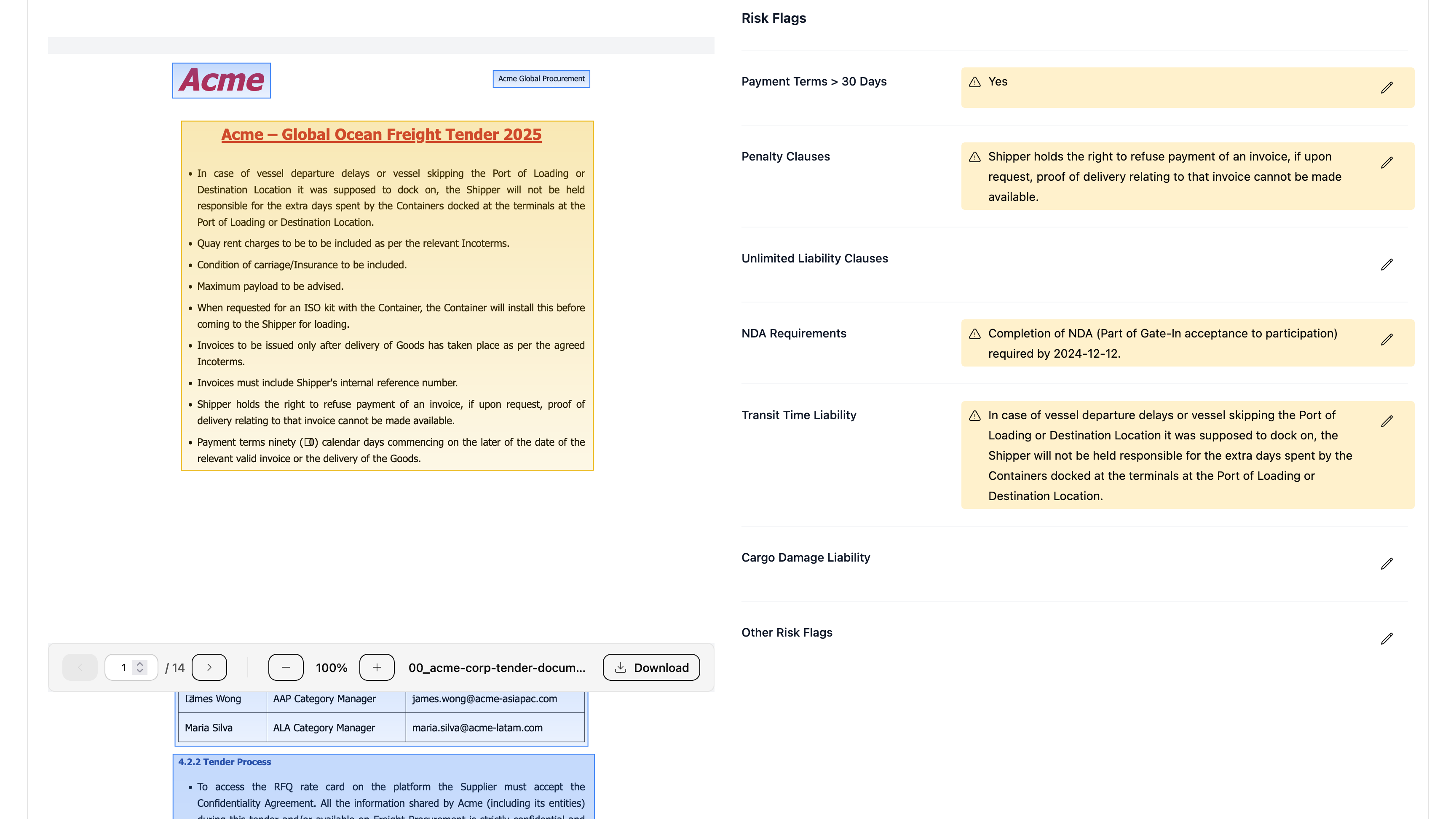
Understand Any Tender in Minutes
Extract key information from tender documents automatically. Define the fields you care about, upload your PDFs, and get structured reports you can review, edit, and export.
- Custom extraction fields
- AI-powered document analysis
- Review, edit, and export to PDF or Excel
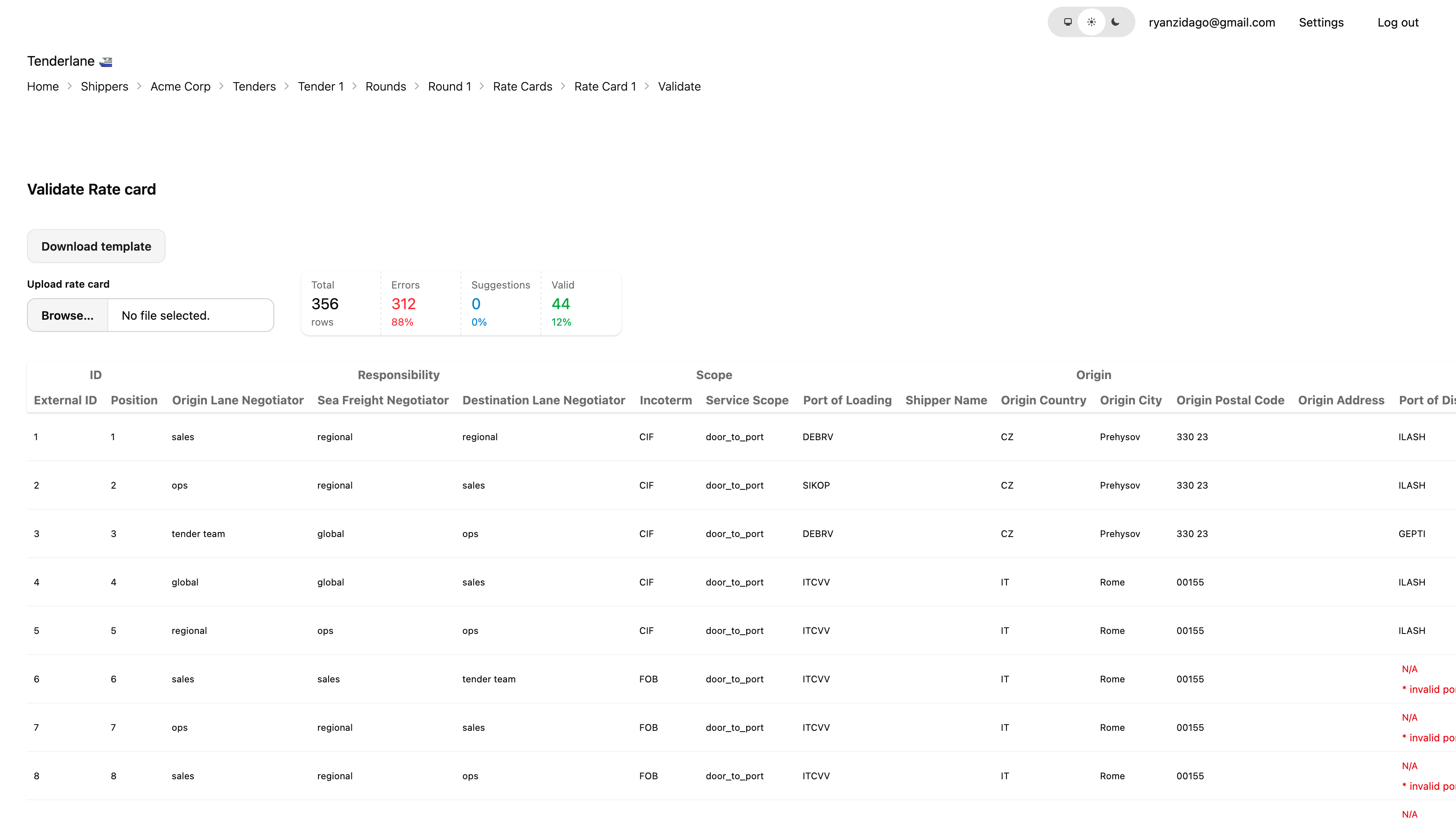
Submit Error-Free Rate Cards
Catch errors before they cost you. We validate data integrity, normalize formats, and flag inconsistencies automatically.
- Validate UN/LOCODEs, incoterms, service scope
- Auto-detect format issues
- Intelligent suggestions
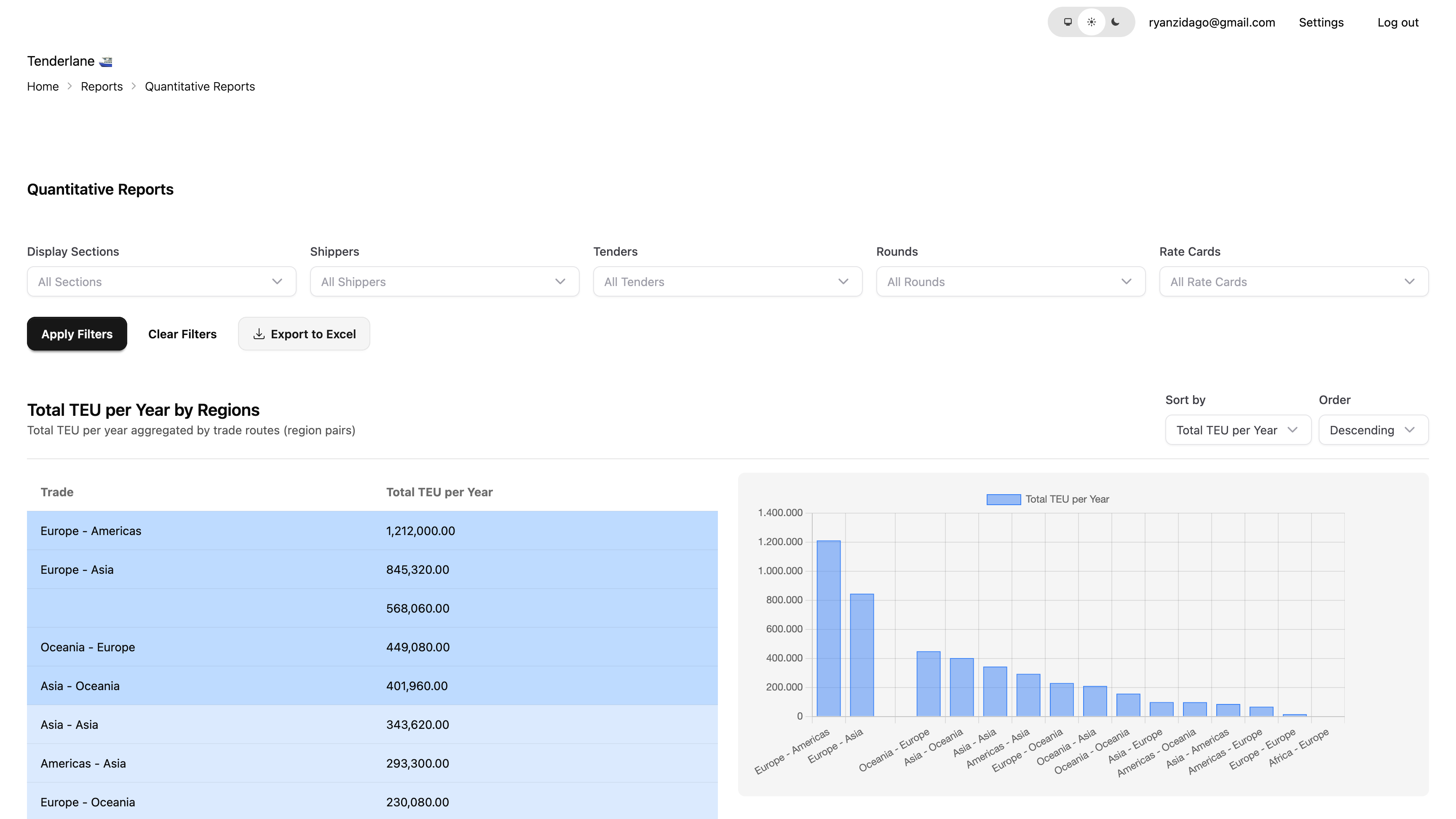
Make Go/No-Go Decisions Faster
Understand your rate card at a glance. See lane distribution and key volume metrics to make informed decisions.
- Lane distribution overview
- Volume breakdown by region
- Key metrics at a glance
Frequently Asked Questions
Qualitative Reports extract key information from tender documents (PDFs, Word docs) like scope of work, service requirements, and terms. Rate Card Analysis validates and analyzes structured pricing data from Excel spreadsheets, checking for errors and showing volume distribution.
For Qualitative Reports: PDFs, Word documents, and text files. For Rate Card Analysis: Excel (.xlsx, .xls) and CSV files.
We validate UN/LOCODEs, incoterms, currency codes, service scope consistency, charge type classifications, and flag common issues like bundled charges or ambiguous terms.
Your data stays private. We don't share or use your documents to train models. Files are processed securely and can be deleted at any time.
Freight forwarders who regularly respond to ocean and air freight tenders. If you spend hours extracting requirements from tender docs or wrangling RFQ spreadsheets, this is for you.
Stop doing data entry. Start winning more bids.
See how freight forwarders are freeing their teams to focus on strategic pricing.
Book a Demo